
Pricing & Cost · Connecticut
Is a marine survey worth it?
For almost every used-boat purchase, yes. One survey routinely catches problems that cost many times its price, and it tells you what the boat is actually worth before you pay for it.
The short version
- A pre-purchase survey is almost always worth it on a used boat: the survey costs $30 to $35 per foot, and a single finding it catches often costs thousands more to fix.
- Surveys routinely find deck core rot, osmotic hull blistering, corroded wiring, soft stringers, and worn standing rigging — none of which show up on a sea-day walk-through.
- The survey pays for itself two ways: leverage to renegotiate or walk away, and a documented fair-market valuation your lender and insurer will want anyway.
- The honest exception: on a cheap, simple, low-value boat where the purchase price is close to the survey fee, the math can tip the other way.
A marine survey is worth it on nearly any used-boat purchase, because the $30-to-$35-per-foot fee is small next to the cost of the problems a survey routinely finds. A survey on a 35-foot boat runs $1,050 to $1,225. A single soft section of deck core, a corroded fuel system, or a set of tired chainplates can cost several times that to put right. You either learn about it before you buy and adjust the deal, or you discover it after the sale and pay for it alone. This guide lays out the real cost-versus-value math, what a survey actually catches, and the narrow case where skipping one can be reasonable.
If you are still deciding whether a survey is necessary at all, start with our guide on whether you need a survey to buy a used boat in Connecticut, which covers lender and insurer requirements. This article is about the money: is the survey a good investment?
What does a marine survey cost?
A pre-purchase marine survey in Connecticut generally runs between $18 and $30 per foot of boat length as a headline rate, depending on the surveyor and how their pricing is built, with add-ons often layered on top. Helm charges $30 to $35 per foot, set by the boat's age, size, condition, and access rather than make or hull type, with no deposit and no credit card to reserve. Payment is due only after the survey is complete and the report is in your hands.
That published range makes the worth-it question easy to frame: you know the survey's ballpark before you call, and the exact figure before you book. Here is what it comes to across common boat sizes on Long Island Sound.
| Boat length | Survey cost |
|---|---|
| 24 ft | $720 – $840 |
| 30 ft | $900 – $1,050 |
| 35 ft | $1,050 – $1,225 |
| 40 ft | $1,200 – $1,400 |
| 50 ft | $1,500 – $1,750 |
For the full breakdown of what changes the total and what is and is not included, see our pillar guide on how much a marine survey costs in Connecticut.
What does a survey catch?
A survey catches the expensive, hidden problems that a test drive and a clean-looking deck will not reveal. A boat can look excellent at the dock and still carry faults that a buyer has no practical way to see. These are the findings that turn up again and again on used boats around the Sound:
- Deck and hull core moisture or delamination. Water that has worked into a cored deck or hull through old fittings can rot the core under a sound-looking surface. Deck core problems are among the most common significant defects surveyors find on older fiberglass boats, and a proper repair can run well into the thousands.
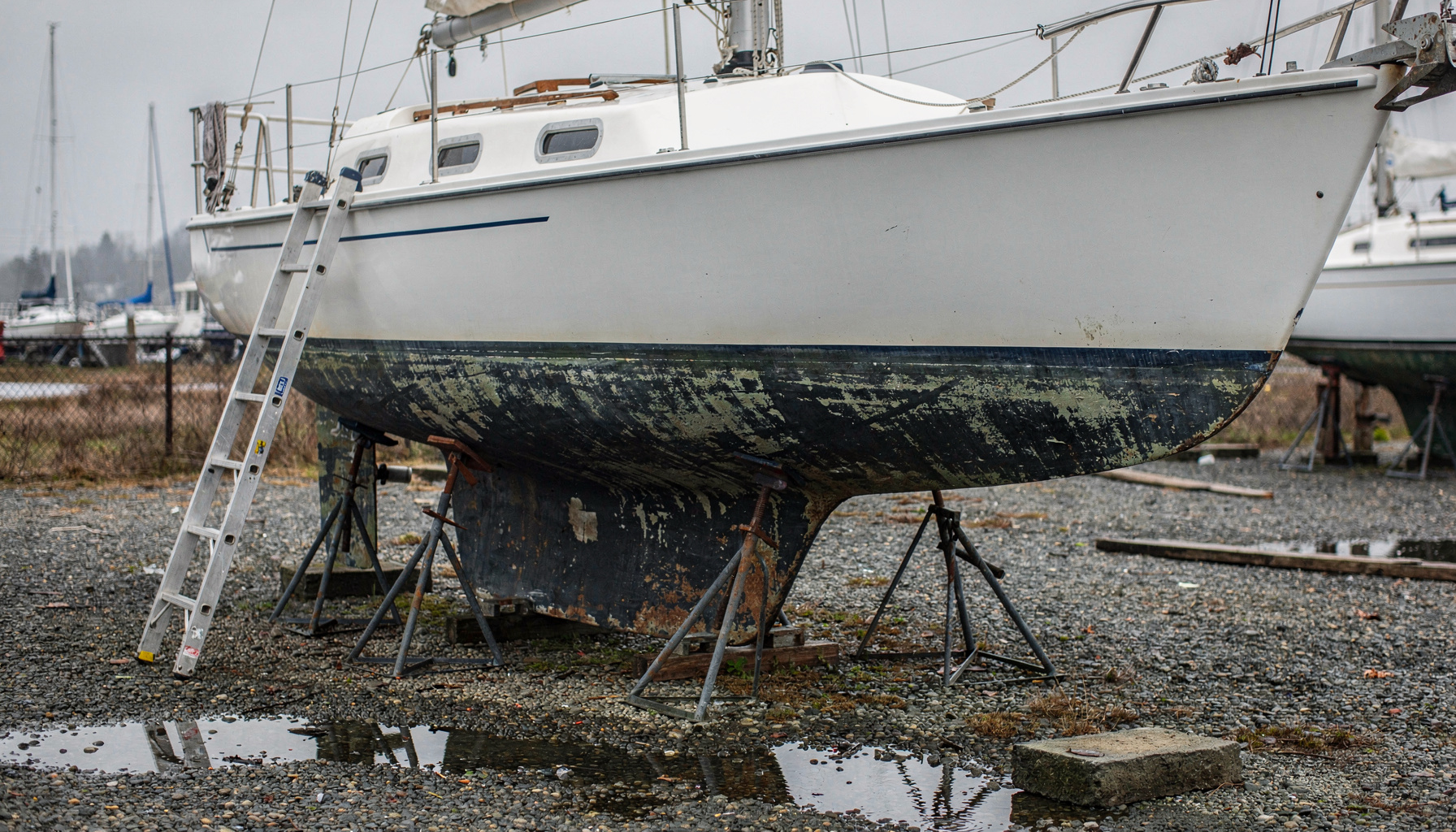
- Osmotic blistering below the waterline. Blistering in the gelcoat and laminate is only visible with the boat hauled, which is exactly when a survey looks. Extensive blistering means a peel-and-recoat job that is expensive and time-consuming.
- Corrosion and wiring faults. Corroded terminals, undersized or improvised wiring, and aging shore-power and DC systems are common on older boats and are both a cost and a safety issue.
- Fuel and propane system problems. A propane or fuel leak is a real hazard, not a cosmetic one. A surveyor checks these systems specifically.
- Soft stringers, bulkheads, and structural members. Structural softness is hard to spot without knowing where and how to check.
- Worn standing rigging and chainplates on sailboats. Rigging has a service life. Replacing a full standing rig or corroded chainplates is a major expense a buyer should know about before agreeing to a price.
Helm's survey covers hull and structure, mechanical and propulsion, electrical, rigging, and safety gear, and documents every finding in a 30-plus page report with photographs and a fair-market valuation. For a step-by-step walk through the inspection itself, see what happens during a marine survey, and for everything the per-foot price covers, see what a boat survey includes for the price.
How the survey pays for itself
The survey earns its fee in three concrete ways, even when the boat turns out to be in good shape.
Negotiating leverage. A documented list of findings is the single strongest tool a buyer has at the table. Sellers argue with opinions; they have a harder time arguing with a photographed, prioritized report from an independent surveyor. Buyers routinely recover the cost of the survey several times over by adjusting the price to reflect deferred maintenance or by having the seller address items before closing. Our guide on how a survey gives you negotiating leverage walks through that conversation in detail.
The power to walk away. The most valuable thing a survey can do is stop you from buying the wrong boat. Walking away from a boat with a rotted core or a tired rig is worth far more than the survey fee, because it spares you a repair bill that can rival the purchase price. The findings that justify walking are the ones in our surveyor's list of red flags when buying a used boat.
The valuation you need anyway. A survey includes a fair-market valuation. Most marine lenders and insurers require a recent survey before they will write a loan or a policy, so on a financed or insured boat the survey is not an optional extra. It is a document you were going to need regardless, and Helm's reports are accepted by marine lenders and insurers and can be formatted to a specific carrier's requirements on request.
When is a survey not worth it?
A survey may not pay off on a small, simple, low-value boat where the purchase price is close to the survey fee. On an inexpensive aluminum skiff or a basic outboard runabout with no inboard engine, no cored structure, and little wiring, there is less hidden risk to find, and the cost of the survey can approach a meaningful share of the boat's price. A cash buyer who can fully inspect a simple boat, and who can absorb a surprise repair without strain, may reasonably skip the survey.
That exception narrows fast. The moment a boat has an inboard engine, a cored hull or deck, a sailing rig, or any real value, the balance swings back toward surveying. And if a lender or insurer is involved, the choice is usually made for you. When you are weighing it, the question is not only the survey fee but the size of the repair you would be exposed to without one.
How to get the most value from a survey in Connecticut
To get full value, hire your own independent surveyor rather than one suggested by the seller or broker, and choose one with direct experience in your boat type. An independent surveyor works for you alone. Our guide on how to choose a marine surveyor in Connecticut covers credentials and the questions to ask before booking.
Helm works exclusively for buyers across Connecticut and Long Island Sound, from the western harbors near Greenwich, Stamford, and Norwalk to the eastern shoreline near Mystic, Stonington, and New London. The surveyor travels to wherever the boat is slipped or hauled. When you are ready, you can schedule your survey in under a minute, with no card required.