
Survey Types · Connecticut
Mechanical (engine) survey vs. pre-purchase survey
A standard pre-purchase survey checks the engine running and reports what it shows. A mechanical survey opens it up with oil analysis, compression, and a borescope. Here is the difference, and when a Connecticut buyer needs both.
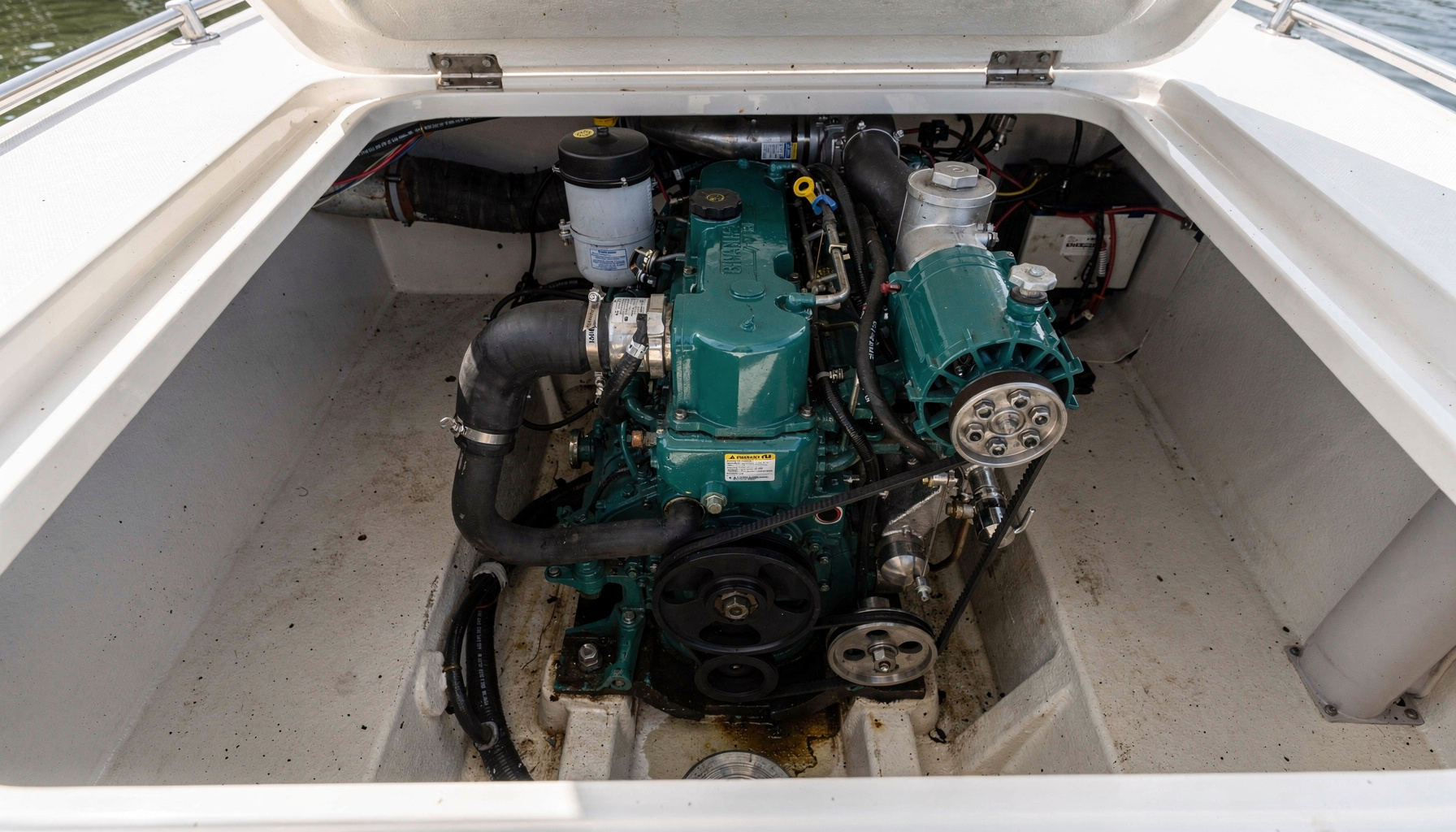
The short version
- A pre-purchase survey gives the engine a visual and operational check — it is run, observed, and reported on alongside the whole boat — and is performed by an accredited marine surveyor.
- A mechanical (engine) survey looks inside the engine: oil and fluid analysis, a compression test, and a borescope. It is performed by a marine mechanic and covers the engine only.
- For many boats the pre-purchase survey's engine check is enough. For higher-hour, higher-value, or diesel engines, add a mechanical survey.
- Helm's pre-purchase survey ($30 to $35 per foot) includes the visual and operational engine assessment, and Helm can coordinate a separate mechanical survey when one is worth it.
The difference is depth and scope: a pre-purchase survey checks the engine visually and operationally as part of inspecting the whole boat, while a mechanical (engine) survey is a deeper, engine-only evaluation that uses oil analysis, a compression test, and a borescope. The pre-purchase survey is performed by an accredited marine surveyor and ends in a report on the entire vessel. The mechanical survey is performed by a marine mechanic and ends in a report on the engine alone. They answer different questions, and on many purchases you want both. Here is exactly what each one does. To see how the engine check fits into the larger inspection, start with what a boat survey includes for the price.
What's the difference, at a glance?
A pre-purchase survey is broad and operational; a mechanical survey is narrow and internal. The table below sets them side by side.
| Aspect | Pre-purchase survey | Mechanical survey |
|---|---|---|
| Performed by | Accredited marine surveyor | Marine mechanic or diesel tech |
| Engine scope | Visual and operational | Internal and analytical |
| Typical methods | Runs and observes the engine; checks for leaks, corrosion, smoke, alarms | Oil and fluid analysis, compression test, borescope |
| Rest of the boat | Covered: hull, electrical, rigging, safety | Not covered: engine and drivetrain only |
| You receive | 30+ page report and valuation | Engine condition report and lab results |
What a pre-purchase survey checks on the engine
A pre-purchase survey checks the engine by running it and observing how it performs, not by taking it apart. The surveyor starts the engine cold, watches it warm up, and runs it under load where a sea trial is possible, noting how it behaves in its working state.
That covers the things you can see, hear, and measure without disassembly: oil and coolant leaks, exhaust smoke and color, corrosion and weeping at fittings, belt and hose condition, mounts and alignment, raw-water flow, alarms and gauges, and the hour-meter reading against the boat's apparent use. Milky oil on the dipstick, heavy smoke, or an overheating alarm is exactly the kind of warning sign this stage is built to catch. It is one part of the wider inspection described in what happens during a marine survey, and a tired engine sits high on a surveyor's list of red flags when buying a used boat. What the pre-purchase survey does not do is open the engine up.
What a mechanical (engine) survey adds
A mechanical survey adds the internal and laboratory tests a visual inspection cannot reach. A marine mechanic looks past the engine's outward behavior to its actual internal condition, using three main tools:
- Oil and fluid analysis — a lab measures the metals worn from internal parts, the oil's viscosity, and any water or fuel contamination. Water in the oil points to a leak or a failing gasket; fuel in the oil thins it so it cannot lubricate. Coolant and transmission fluid can be sampled the same way.
- Compression test — measuring the pressure each cylinder builds reveals worn rings, bad valves, or carbon buildup. A diesel relies on very high compression to fire at all, often in the range of 350 to 475 PSI, so a weak cylinder shows up clearly. The test usually requires removing an injector or glow plug, which is why it is a mechanic's job.
- Borescope inspection — a small camera passed into a cylinder shows the combustion chamber and cylinder walls directly. It tells you whether a compression problem is an expensive damaged cylinder wall or a cheaper cracked head gasket or misadjusted valve.
None of this is part of a standard pre-purchase survey, because none of it can be done without disassembly. That is the line between the two surveys: one reports what the engine shows while running, the other reports what is happening inside it.
Do you need both?
For many boats, the pre-purchase survey's visual and operational engine check is enough, especially on a newer, low-hour outboard or a well-documented engine that runs clean on the sea trial. A mechanical survey earns its cost when the stakes inside the engine are higher.
Add a mechanical survey when the engine is high-hour or near a major service interval, when it is a large or repowered diesel whose replacement cost runs into five figures, when the pre-purchase survey or sea trial turns up something that warrants a closer look, or simply when you want certainty before a major purchase. A survey is not a guarantee of future performance, and a buyer financing or insuring a significant vessel often wants the deeper engine picture before closing. For how that decision sits inside the larger question of whether to survey at all, see do you need a survey to buy a used boat in Connecticut.
How this works at Helm in Connecticut
Helm's pre-purchase survey includes the visual and operational assessment of the engine, drivetrain, and steering as standard, at $30 to $35 per foot with no deposit. When an engine warrants a full internal evaluation, Helm will tell you plainly and can coordinate a mechanical survey with a marine mechanic alongside the inspection.
Any fees for the mechanic, and any yard or lift fees for a haul-out or sea trial, come from those providers, not from Helm, and we quote them up front. The cost of adding a mechanical survey is small next to the price of a failed engine, which is the same math behind the survey itself: see our guide to marine survey cost in Connecticut. When you are ready, you can schedule a survey with no card on file.